
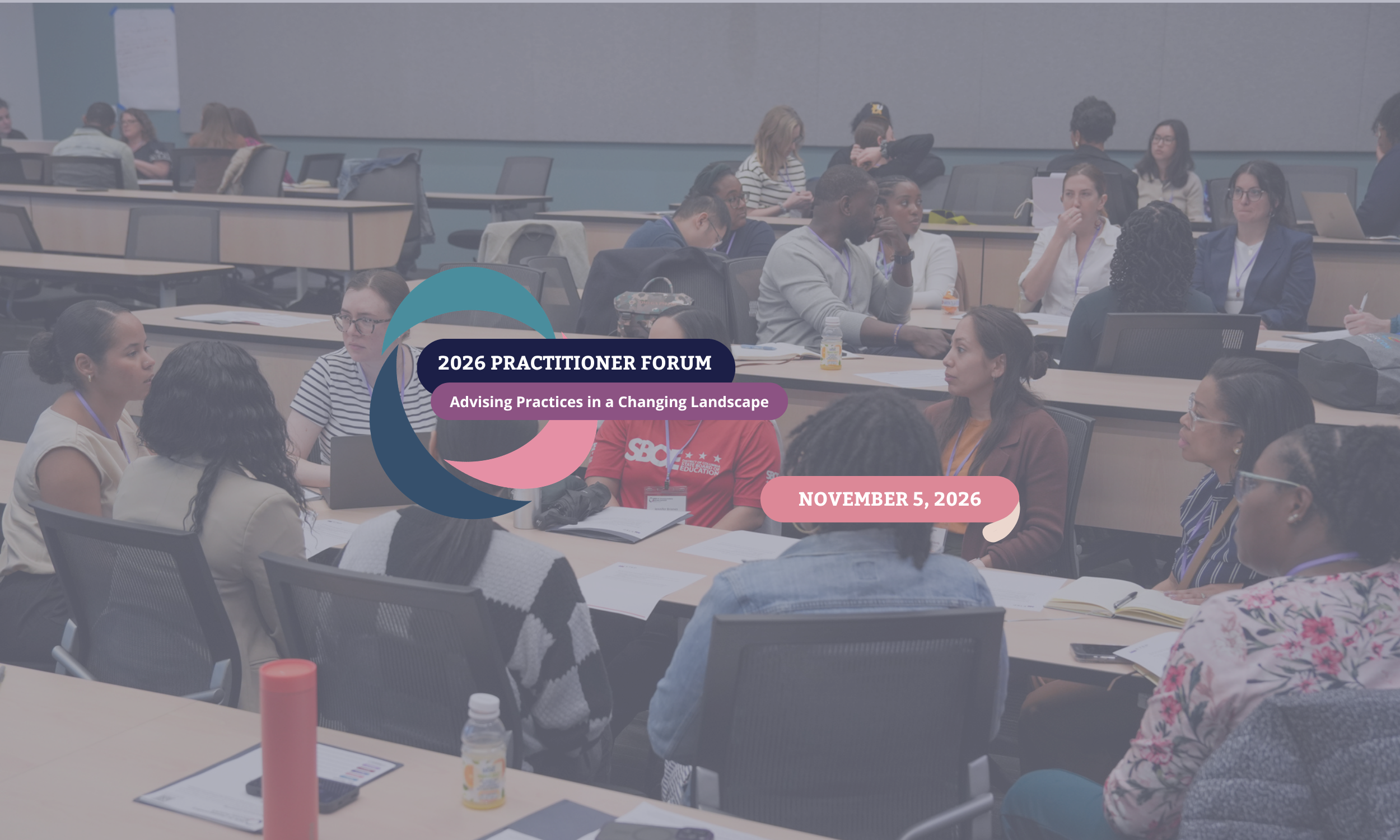
Tickets are now on sale! Click here to buy yours today.
Tickets are now on sale! Click here to buy yours today.
2026 Practitioner Forum Agenda

Thursday, November 5 · 11:00 AM-3:30 PM · Virtual
-
Welcome to the Forum! Join us as we come together as a community of practitioners, explore what brings us here this year, and walk through everything you need for a great day of learning.
-
Choose one of the following sessions:
Education Through Employment Pathways: Dive into the Data Dashboards
Theme: Trends & Systems Innovation
Presenters: Seth Shapiro | Interim Executive Director
Organization: Education Through Employment Pathways, DC Deputy Mayor for Education
Suggested Audience: K12 Staff
This session will introduce practitioners to the Office of Education Through Employment Pathways (ETEP) and its new outcomes dashboards, which connect education and workforce data to show where DC students and alumni end up after high school and postsecondary education. Participants will explore data on alumni outcomes, including wages, industries, and differences across demographic and program pathways, and learn how to use the dashboards to better understand their own students’ trajectories. The session will also highlight key findings from ETEP’s first research briefs and consider how practitioners can use this data to strengthen advising, inform programming, and help students make more informed postsecondary and career decisions.
The Skills That Matter: Preparing Students for a Changing Workforce
Theme: Trends & Systems Innovation
Presenter: Chelsea Coffin | Deputy Director; Anoosha Imran | Education Research Analyst
Organization: D.C. Policy Center
Suggested Audience: All
What skills help young people get their first job—and build careers that lead to economic mobility? In this interactive session, practitioners will explore the durable skills that students need to navigate an evolving labor market, how those skills align with what employers and alumni actually use on the job, and how AI may change what the workforce values. Through polls, an alumni story, a skills-sorting activity, and discussion of D.C. Policy Center research, participants will reflect on how education and workforce programs can better help students build the career assets they need to succeed—and what D.C. could do differently to strengthen those pathways.
Leveraging Course Equivalency to Clear a Path for Student Opportunity & Success
Theme: Trends & Systems Innovation
Presenters: Beth Dunn | Consultant, Workforce Development
Organizations: CityWorks DC
Suggested Audience: K12 Staff
Course equivalency, which lets CTE courses count toward core graduation requirements like art or lab science, advances equity, efficiency, and student-centered learning. This session shows how DC educators can use equivalency to support student progress. Participants will learn to identify and implement equivalencies that honor prior learning, create time for internships and dual enrollment, and reduce redundant coursework so students make the most of their time.
Putting Families On: A Postsecondary Playbook for Practitioners
Theme: Trends & Systems Innovation
Presenters: Michael Andrews | Consultant, Family & Community Engagement
Organization: Coaction Collective
Suggested Audience:
What does a parent actually need to know when their student heads to college, a job, or a training program? Dr. Michael Andrews answers from both sides of the table, as a longtime postsecondary access practitioner and as a parent navigating the journey right now. This session gives K12 and postsecondary practitioners concrete strategies and family-facing tools to strengthen these relationships across every pathway.
-
Choose one of the following sessions:
Let them Lead: Growing Student Leaders, Gaining Bandwidth
Theme: Sustainable Practice & Capacity-Building
Presenters: Regina McClure, Brandon Wims, Tammy Lorenzo | CTE Directors
Organization: DC Public Schools, Jackson Reed High School
What if the tasks crowding your to-do list could become meaningful leadership roles for students? In this interactive session, you'll learn how Jackson-Reed High School built a student leadership structure that lightens the load for educators while giving students authentic professional experience. Presenters will walk you through their resources, including role descriptions, the application process, and roll-out timelines. You'll then work with peers and a member of the Jackson-Reed team to plan how some or all of the model could work in your own setting.
Turn It Toward Yourself: A Strengths Approach to Sustainable Practice
Theme: Sustainable Practice & Capacity-Building
Presenter: Lourdes Laguna | Leadership Coach
Organization: Laguna & Co.
Postsecondary outcomes in DC rest on the shoulders of practitioners, and when a trusted adult burns out and leaves, young people lose continuity at the exact moments it matters most. In this working session, you'll name the strengths you already bring to your work, find the evidence of them in real moments, and turn one of them toward sustaining yourself. You'll leave with a one-page plan and a seven-day experiment. No assessment required.
More Than “Busy:” How our daily choices shape our social well-being
Theme: Sustainable Practice & Capacity-Building
Presenter: Natasha Coco Benitez | Coach, Professor, Speaker
Organization: Coach with Coco Wellness
Being constantly busy can leave little room for the relationships, experiences, and daily choices that support our social well-being. This interactive virtual session invites practitioners to reflect on where their time and energy are going and identify one meaningful next step toward greater connection, renewed purpose, and sustainable well-being—both personally and in their work with learners.
-
Choose one of the following sessions:
No Backwards Steps: Helping Every Student Find a Path Forward
Theme: The Both-And Approach
Presenters: Sekenia Welch | College and Career Coordinator
Organization: DC Public Schools, Dunbar High School
This session explores how practitioners can move beyond a “college or career” mindset and help students consider a full range of postsecondary options, including degrees, credentials, apprenticeships, skilled trades, military service, and employment. Drawing on Dunbar’s internship program, participants will explore how real-world experiences can connect students’ interests to future goals and practice helping them identify a clear, supported next step.
Beyond Access: Who Taught Them To Navigate?
Theme: Building the Full Pipeline
Presenters: Alexiya "Lexii" Wilson | Program Manager at Mikva Challenge, Owner at 360 Learning Solutions; Angel O'Neal | Student at Benjamin Banneker & Mikva Challenge
Organization: Mikva Challenge
Getting young people into college, training programs, or career pathways is only part of the work. Have we prepared them to navigate what happens once they arrive? In this interactive, youth co-facilitated session, participants will explore the difference between doing for young people and building their capacity to independently make decisions, seek support, advocate for themselves, and navigate unfamiliar systems. Participants will leave with the KNOW–CHOOSE–ASK–ADVOCATE–ADAPT Postsecondary Navigation Readiness Framework and practical strategies for shifting youth voice into youth agency.
Psychological Safety as a Strategy for Access, Persistence & Career Success
Theme: Removing Barriers
Presenters: Shira Woolf Cohen | Co-Founder; Tiffany Searles | Lead Partner of Community Engagement
Organization: Innovageous
Psychological safety is an often-overlooked factor in whether learners feel comfortable asking questions, seeking support, making mistakes, and persisting through challenges. This interactive session will help practitioners recognize the behaviors and communication practices that strengthen or undermine psychological safety and apply strategies such as empathetic listening, strengths-based language, and growth-oriented feedback. Participants will leave with practical approaches they can use to build trust, learner agency, and persistence across educational, postsecondary, and workforce settings.
Finding the Fit: A Practitioner's Guide to Connect Students to Apprenticeship
Theme: The Both-And Approach
Presenters: Willa Reinhard | Manager, Education Partnerships & Alumni Experience
Organization: CityWorks DC
This session equips education practitioners with practical tools to identify students who may thrive in apprenticeship, accurately communicate its value, and collaborate with CareerWise DC to help students navigate the application process. Participants will gain a deeper understanding of the various types of young people who succeed through apprenticeship and how the experience builds foundational skills that support both career success and college readiness.
-
Choose one of the following sessions:
From Exploration to Action: Advising Learners Across Multiple Postsecondary Pathways
Theme: The Both-And Approach
Presenters: Shira Woolf Cohen | Co-Founder; Tiffany Searles | Lead Partner of Community Engagement
Organization: Innovageous
Effective postsecondary advising helps learners understand themselves, explore meaningful possibilities, and make informed decisions across multiple pathways. Grounded in a Career Development Continuum and practical planning framework, this interactive session will help practitioners strengthen advising experiences that move learners from self-awareness and career exploration to planning and action. Participants will leave with adaptable tools and strategies they can use across school, workforce, community-based, and postsecondary settings.
Before Senior Year: Reimagining Postsecondary Planning as a K-12 Journey
Theme: Building the Full Pipeline
Presenters: Brittany Crumbling | Manager, School Counseling and Postsecondary Planning; Inatimi Oguara | Postsecondary Planning Specialist
Organization: DC Public Schools
This session explores how schools can move beyond viewing postsecondary planning as something that begins in junior or senior year and instead create intentional experiences that build across a student’s K–12 journey. Participants will explore practical ways to connect existing practices—including career exploration, academic planning, advising, and college and career exposure—while building shared ownership across staff, families, and partners. Participants will leave with a framework for creating more meaningful and developmentally appropriate experiences that prepare students to make informed decisions about what comes next.
Future Forward: Advising Strategies for Alumni Re-Engagement and Persistence
Theme: Removing Barriers
Presenters: Jasmin Orellana | Senior Manager of Post Secondary Support;
Anthony Guyton | Associate Director of Post-Secondary SupportOrganization: KIPP DC
The Future Forward program re-engages previously disconnected KIPP Forward alumni through a 6-month, cohort-based model combining intensive mentoring, financial stipends, and skill development to help students persist in aligned post-secondary pathways. This session explores how practitioners can use advising strategies through the Future Forward framework to reintroduce disengaged students to post-secondary education and support different career paths young adults lean toward, while addressing the limited availability of non-traditional certification programs in DC. Participants will receive guidance and resources to help them navigate institutional barriers, successfully reenter post-secondary programs, and build career readiness and success.
Beyond the Default: Expanding How We Advise Students
Theme: The Both-And Approach
Presenters: Danielle Walker | Director, GEAR UP
Organization: DC CAP Scholars
Students don’t always know what they want to do next—and their options extend well beyond a single degree pathway. In this interactive session, high school practitioners will examine how their own definitions of “readiness” shape the pathways they present to students, from college degrees to non-degree options. Participants will audit their pathway knowledge, practice a five-question inquiry protocol for conversations with students whose goals are still taking shape, and consider how to build a broader, more intentional approach to advising within their own teams and organizations. The session will leave practitioners with concrete tools they can use to expand the pathways they discuss and better support students in finding a next step that fits.
-
Close out the Forum together. We'll reflect on what we've learned, share the ideas we're bringing back to our work, and celebrate the community of practitioners that made the day possible.
Our Themes
1) Sustainable Practice & Capacity-Building
How can we strengthen advising while supporting the practitioners doing the work?
Explore strategies for navigating capacity limits, supporting practitioner well-being, collaborating across programs for greater efficiency, and expanding advising beyond one-on-one models. Sessions will also highlight promising approaches, including staged or phased advising models and role differentiation by grade band, that help organizations extend their reach while maintaining quality support for learners.
4) Building the Full Pipeline
How can we create more connected support for learners at every stage?
Explore strategies for expanding career exploration throughout the K12 journey, building stronger cross-sector partnerships for consistent career exposure, staying connected with learners beyond graduation, re-engaging disconnected students, and strengthening coordination across DC’s advising ecosystem, including greater integration of adult education programs.
2) The Both-And Approach: Advising Across Multiple Postsecondary Pathways
How can we prepare practitioners to support every pathway a learner might pursue?
Build the skills needed to have effective advising conversations across the full range of postsecondary options. Sessions will explore advising for both degree and non-degree pathways, internships and work-based learning opportunities, and practical approaches for supporting learners whose goals and next steps are still taking shape.
5) Navigating the Future: Trends & Systems Innovation
How can advising evolve alongside a changing world?
Explore how practitioners can interpret labor market and workforce data, understand the impact of policy on postsecondary access and success, strengthen education-employer sector relationships, and help learners build sustainable plans aligned with an evolving economy. Sessions will examine how advising practices can remain responsive to emerging trends and the future of work.
3) Removing Barriers to Access & Persistence
How do we help learners navigate the barriers that stand between them and opportunity?
Explore how practitioners can support learners in making financially feasible pathway decisions while addressing the broader challenges that impact access, persistence, and success. Conversations will include barriers related to documentation and immigration status, academic challenges, disability, chronic absenteeism, housing and food insecurity, language access, mental health, and other factors affecting learners’ journeys.