
Find a copy of the printed agenda here: Agenda Packet (Click Here)
2026 Summit Agenda
-
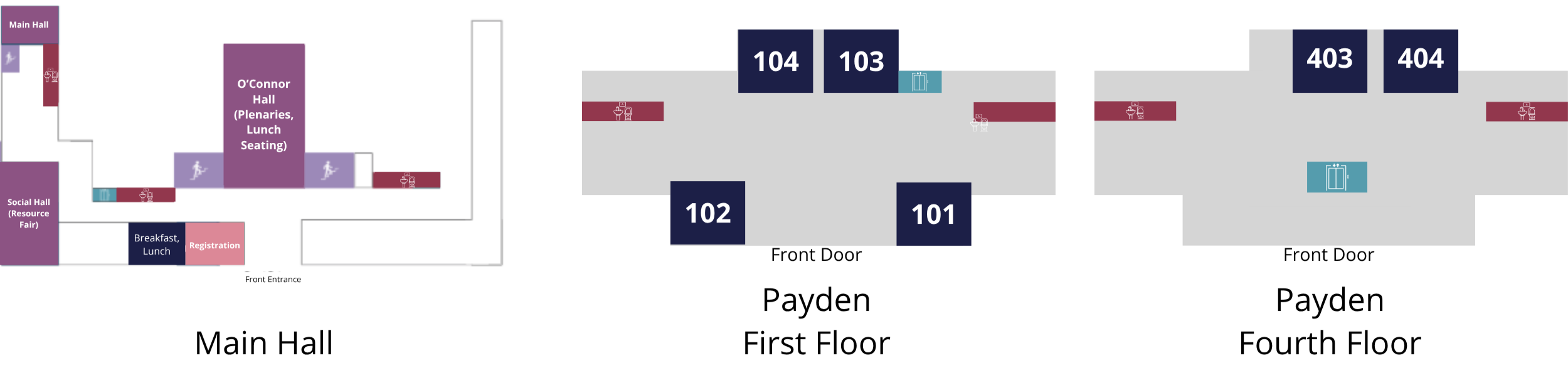
Join us at Trinity’s Main Hall for registration, breakfast, and catching up with colleagues from across the ecosystem!
-
Join us for a dynamic opening plenary that grounds and energizes our day of learning. We’ll hear from the Office of the Deputy Mayor for Education on the city’s commitment to expanding equitable pathways for all young people in DC through Compact 2043. Then, a panel of leaders from across our ecosystem will reflect on the challenges we’ve navigated over the past year - and spotlight the bold, innovative solutions emerging from our field. Together, we’ll set the tone for a day focused on resilience, collaboration, and action!
Opening Plenary Speakers:
Mukta Ghorpadey | Executive Director, DC Postsecondary Success Collaborative
Clara Haskell Botstein | Chief of Staff, Office of the Deputy Mayor for Education
Amy Dudas | Senior Advisor, Career Readiness, DC Action
Julia Hellmich | Managing Director, KIPP Forward
Leslie Nicholson, Ed.S. | College & Career Coordinator, Coolidge Senior High School
Eric Waldo | Chief Executive Officer, DC College Access Program
Sherrod Williams, Ph.D. | Chief Executive Officer, New Futures
Amelia Hogan | Senior Advisor, DC Postsecondary Success Collaborative
-
Start the day by connecting with peers from across DC’s postsecondary ecosystem while exploring the data shaping our collective work. In facilitated breakout groups, participants will engage in structured conversations to build relationships and surface shared goals, followed by a guided data walk featuring alumni perspectives and insights into DC’s youth workforce landscape. We’ll examine patterns, name gaps, and generate ideas for collaboration - leaving with new relationships and practical insights to carry into the rest of the Summit.
-
Partnering When Everything Feels Perilous: Lessons from the Talent for Tomorrow Alliance
Room: 103
Theme: Partnerships That Matter
Presenters: Brandon White | CEO, Spark the Journey; Sherrod Williams | CEO, New Futures; Elizabeth Lindsey | Executive Director, Genesys Works
Organization: Talent for Tomorrow Alliance
Suggested Audience: Direct Service Practitioners, Program and Organization Leaders
This session will explore the value of flexibility in nonprofit partnerships, drawing on recent lessons from the Talent for Tomorrow Alliance — a collaboration among five local and national nonprofits. In a year where we faced unprecedented strain, each partner grappled with different organizational vulnerabilities, highlighting the need for dynamic collaboration. The session will share key practices for building more durable partnerships, including overcommunicating, seeking trust‑based sponsors, and letting go of previous models when new approaches can yield greater impact.
Leading Human-Centered AI: Practical Strategies for Educators and Postsecondary Success
Room: 102
Theme: AI is Here
Presenter: Dr. William Blake | Author, The AI School Leader
Organization: The AI School Leader
Suggested Audience: Direct Service Practitioners, Program and Organization Leaders
This session draws on The AI School Leader to explore how educators and advisors can use artificial intelligence to improve efficiency, innovation, and adaptability while preserving strong human relationships. Participants will learn practical, equity-centered strategies for integrating AI into advising, instruction, and pathway coordination to strengthen postsecondary transitions. Attendees will leave with actionable tools to support student success in college, careers, and life.
What Did You Expect? The Hopes and Hurdles of Transitioning from High School to College in DC
Room: 403
Theme: Doing More With Less
Presenters: Bethany Monea | Assistant Professor of Writing and Community Engagement, UDC; Shamelle Yemofio | Enrollment & Student Success Coach, Senior, ASU Local; Kim Crews | Administrator, UDC; Nikki Williams | Site Director, ASU Local; Cierra Garrison | Student Worker, ASU; Aniyah Gaffney | Student Worker, UDC
Organizations: University of the District of Columbia, Arizona State University Local
Suggested Audience: All
This presentation centers the voices of DC students as they reflect on their transition from high school to college — the challenges they faced, the resources they relied on, and the strategies that supported their success. Participants will gain insight into the local options available to DC students, as well as the specific needs that shape their transition experience. We will also highlight how University of the District of Columbia and ASU Local intentionally support students during this critical period.
DC Student Pathways Data: Help Shape Educator Tools
Room: 104
Theme: Coordinating Data, Research, & Policy
Presenters: Jade Chandler | Policy and Engagement Specialist, Office of Education Through Employment Pathways; Josh Boots | Executive Director, EmpowerK12; Jesika Currie | Director of School Improvement, EmpowerK12
Organizations: Office of Education Through Employment Pathways, EmpowerK12
Suggested Audience: All
The Office of Education through Employment Pathways is developing a suite of public dashboards — set to launch by spring 2027 — that will illuminate post-high school pathways of students served by DC public schools: including career & wage outcomes for the first time ever. In this session, participants will preview the dashboard concepts and the data they'll surface, share feedback on clarity and usefulness, and help ensure the final product reflects the needs of DC's broader education and workforce community.
Promoting Psychological Safety for Young People
Room: 101
Theme: Empowering Young People Today
Presenter: Shira Woolf Cohen | Co-Founder, Innovageous
Organization: Innovageous
Suggested Audience: Direct Service Practitioners
This workshop will focus on the role of psychological safety as a critical foundation for engaging, empowering, and retaining young people across career-connected learning, postsecondary transition, and early workforce experiences. Participants will explore what psychological safety is — and what it is not — within youth-serving and cross-sector settings, with attention to how power dynamics, communication styles, and adult behaviors shape young people’s willingness to engage, take risks, and persist through challenges.
Building Safety, Opportunity, and Success for Students with Disabilities — In School and at Work
Room: 404
Theme: Designing Career Pathways
Presenters: Carolyn Jeppsen | CEO, BroadFutures; Allison Hoegsdorf | Work-Based Learning Specialist, SchoolTalk
Organizations: BroadFutures, SchoolTalk
Suggested Audience: Direct Service Practitioners, Program and Organization Leaders
This session explores the evolving challenges that students with disabilities face in creating safety and achieving success in both school and the workplace. We will explore issues of physical safety, systemic workplace barriers, and the impact of shifting DEI commitments and examine practical strategies to reduce barriers, strengthen supports, and improve outcomes in education and early career experiences. The discussion will highlight actionable practices that educators, service providers, and career counselors can apply in their day-to-day work.
-
Lunch will be provided in Main Hall, where you can also get to know 20+ local and national organizations during our Resource Fair! Build your referral network while learning more about these providers and the essential resources they provide to our young people and residents.
Resource Fair Tabling Organizations:
Ambramson Scholarship Foundation
Anansi Academy
Arizona State University Local
BroadFutures
Carlos Rosario
CityWorks DC
DC Board of Education
DC Center for Independent Living
DC Central Kitchen
DC Department of Energy & Environment
Generation Hope
Innovageous
LAYC Career Academy
Level All
New Futures
Next Step Public Charter School
Office of the State Superintendent of Education
Partnership for Student Success
Prentix
SMYAL
study snacks
Trinity Washington University
University of the District of Columbia
-
Closing the Leadership Coaching Gap: Using AI to Develop Leaders at Every Level
Room: 102
Theme: AI is Here
Presenters: Latisha Chisholm | Founder & CEO, Subversive Leader; Nierria Jones-Cooper | College Counselor & Advisor, College Track
Organizations: Subversive Leader, College Track
Suggested Audience: Direct Service Practitioners, Program and Organization Leaders
Traditional leadership coaching costs $300+/hour and is reserved almost exclusively for executives — leaving early and mid-career professionals to figure it out alone. This interactive session explores how AI-powered coaching is making quality leadership development accessible to early and mid-career professionals who have long been left out of it, with hands-on opportunities to engage with Subversive Leader's AI Colleague, Zmara. Participants will leave with resources for evaluating AI coaching tools and access to an individualized professional development ecosystem.
Expanding Access: Advising Students Ineligible for Federal Aid
Room: 103
Theme: Doing More With Less
Presenters: Monica Villacorta | College and Career Coordinator, Columbia Heights Education Campus, DC Public Schools; Donald Wilhite | College and Career Coordinator, Garnett Patterson STAY, DC Public Schools; Ashlie Savage | College and Career Coordinator, Anacostia High School, DC Public Schools
Organization: DC Public Schools
Suggested Audience: Direct Service Practitioners, Program and Organization Leaders
Join us for an interactive session focused on supporting students who are ineligible for federal financial aid. Participants will explore the key factors shaping these students’ educational journeys and learn equity-centered best practices for college and career advising. Attendees will leave with practical tools and alternative funding strategies to guide students and families beyond FAFSA.
Compact 2043: Building Momentum for Postsecondary Pathways
Room: 104
Theme: Coordinating Data, Research, & Policy
Presenters: Clara Botstein | Chief of Staff, Office of the Deputy Mayor for Education; Bridget Cherry | Consultant, Compact 2043
Organization: Office of the Deputy Mayor for Education
Suggested Audience: All
Compact 2043 is DC’s citywide commitment to strengthen and expand postsecondary pathways for DC students, so that all children born today will graduate from high school prepared for success in higher education and good jobs. In this session, we will discuss the Compact, highlight wins from 2025, share and discuss priority areas for 2026, and connect participants with opportunities to engage further about the Compact.
From Control to Collaboration: Elevating Youth Voice Through Adult Allyship
Room: 403
Theme: Empowering Young People Today
Presenters: Kawanza Billy | Senior Youth Advocacy & Engagement Manager, DC Action; Jani Cousins | Youth Advisory Team Mentor, DC Action; Amy Dudas | Senior Advisor, Career Readiness, DC Action; Annisha Perry | Context Team, DC Action; Latoria Williams | Context Team, DC Action; LaTia Taylor | Context Team, DC Action; Tatiyana Bell | Context Team, DC Action
Organization: DC Action
Suggested Audience: All
This session will create space for adult allies to self-reflect on power-sharing, explore concrete ways youth engagement can be introduced or deepened within the design of their programs or initiatives, and put reflections into action. Attendees will practice allyship and apply power-sharing concepts in fellowship with youth panelists as they share their experiences and recommendations for navigating challenging postsecondary realities.
Defining and Delivering High-Quality Postsecondary Advising Across Grades 9-12
Room: 404
Theme: Designing Career Pathways
Presenters: Bill DeBaun | Senior Director, National College Attainment Network; Damali Stewart | District Director, Postsecondary Success Programs, DC Public Schools
Organizations: National College Attainment Network, DC Public Schools
Suggested Audience: Direct Service Practitioners, Program and Organization Leaders
District and school leaders are working to improve postsecondary outcomes for students, but many lack a common language or roadmap for effective, scalable advising. This session introduces a High-Quality Postsecondary Advising Framework, a research-informed structure for grades 9-12 that outlines what students should know and experience on their path to education or training after high school. Presenters will unpack the key components of the framework and show how it can support consistent practices across schools, improve student decisions, and drive better outcomes and also compare to a similar framework being used in DCPS.
Pivot or Persevere: Cultivating Curiosity in Pursuit of Career Success
Room: 101
Theme: Designing Career Pathways
Presenter: Jessica Brady | Director of Partnerships, Strategic Growth, The Opportunity Network
Organization: The Opportunity Network
Suggested Audience: Direct Service Practitioners, Program and Organization Leaders
In this session, participants will explore processes for helping students navigate through the myriad of obstacles that arise in pursuit of a career, such as academic challenges, imposter syndrome and identity in the workplace, and the importance of centering wellness. Participants will leave with tools and resources to help guide students in determining when to pivot in their career journey and when to persevere while fostering a spirit of lifelong exploration.
-
DC Builds DC Panel on Candidate Readiness
Room: 103
Theme: Partnerships That Matter
Presenters: Erin Bibo | Vice President of Strategic Initiatives, CityWorks DC; Tanya Borachi | Director of Education & Workforce Initiatives, Federal City Council; Ilyssa Schwartz | DC-Baltimore Self-Perform Workgroup Lead, DPR Construction; Victor Tejada | Talent Acquisition Manager, rand* construction corporation; Mike Dempsey | Business Development and Communications Manager, Carpenter Contractor Trust
Organizations: CityWorks DC, Federal City Council
Suggested Audience: All
DC Builds DC Industry Leaders will share specific, actionable insights on what they are seeking in entry level candidates for both Skilled Trades and Construction Management roles. They will relay both examples of what they like to see in candidates and reasons other candidates do not advance in the hiring process. The team will provide summary data from hundreds of interviews highlighting hiring trends.
AI's Impact on the Workforce and Entry Level Jobs
Room: 102
Theme: AI is Here
Presenter: Sam Meisenberg | study snacks, Co-Founder; Jung Lee | study snacks, Co-Founder
Organization: study snacks
Suggested Audience: All
This session explores the impact of AI on the workforce, analyzing whether Gen AI is actually delivering on its ROI promises — and what that means for the entry-level job market. Spoiler alert: it's both good and bad for junior talent. While AI has displaced some traditional junior roles, it has also created an urgent demand for 'AI-fluent' talent — a skillset business leaders increasingly associate with the next generation of workers.
Target Skills for Economic Mobility in D.C.
Room: 104
Theme: Coordinating Data, Research, & Policy
Presenters: Chelsea Coffin | Deputy Director, D.C. Policy Center; Anoosha Imran | Education Policy Initiative Fellow, D.C. Policy Center
Organization: D.C. Policy Center
Suggested Audience: All
The D.C. Policy Center will present a session that analyzes the skills young adults in D.C. have and those most needed for high-opportunity, high-demand occupations. Drawing on national labor data and qualitative insights from young adults and employers, the session will highlight key skills gaps. Participants will discuss implications for program design and actionable insights to better align education, workforce, and postsecondary pathways with economic mobility outcomes in D.C.
Inclusive by Design: Practical Strategies for Implementing Status-Blind Programming
Room: 101
Theme: Empowering Young People
Presenters: Molly Friesenborg | Director of Scholar Programs, New Futures; Kera Donaldson | Scholars Program Advisor, New Futures
Organization: New Futures
Suggested Audience: Direct Service Practitioners, Program and Organization Leaders
This session will share lessons learned from implementing status-blind programming and creating inclusive spaces that support students of all immigration statuses. Presenters will share strategies for creating learning environments that proactively acknowledge differences in pathways, benefits, and barriers — ensuring undocumented students are neither singled out nor erased. Through guided discussion and planning activities, participants will exchange ideas and identify steps to strengthen inclusion within their own programs.
The Importance of Early Summer Programs
Room: 403
Theme: Designing Career Pathways
Presenters: Imani Josie | Director of College and Career, KIPP DC: Legacy College Prep; Julia Hellmich | Managing Director, KIPP Forward; Patrick Wu | College and Career Counselor, KIPP DC: College Preparatory; Clarence Cross | Associate Director, College and Career Pathways, Friendship Public Charter School
Organizations: KIPP DC, Friendship Public Charter Schools
Suggested Audience: Direct Service Practitioners, Program and Organization Leaders
High-quality college and career summer experiences play a critical role in shaping postsecondary access, persistence, and completion for high school students, particularly for first-generation youth. Helping students find meaningful opportunities, plan logistics, and support applications at scale can be a daunting task for high school counselors who are short on time and capacity.
Designing the Conditions for Universal Internships: Policy, Partnerships, and Practice at Dunbar High School
Room: 404
Theme: Designing Career Pathways
Presenters: Latisha Coleman | Principal, Dunbar High School, DC Public Schools; Constance Parham | Director, Innovation & Design, DC Public Schools; Mische Walden | Manager of Career Academies, Dunbar High School, DC Public Schools
Organization: DC Public Schools
Suggested Audience: Direct Service Practitioners, Program and Organization Leaders
At Dunbar High School, a bold vision — to ensure every student completes a high‑quality internship — sparked a school‑level transformation that ultimately reshaped district policy and practice. This session unpacks how Dunbar leaders, DCPS central office, students, and community partners collaborated to design a system where 100% of eligible seniors participate in meaningful work‑based learning. Participants will hear directly from school and district leader about how the team built the operational backbone needed to scale internships equitably: safety protocols, staffing models, logistics workflows, and partnership cultivation.
-
We’ll close the Summit by centering the voices that matter most - young people navigating the postsecondary journey. In a powerful panel conversation, DCPS and DCPCS alumni will share their challenges, successes, and the resilience that has carried them forward. They’ll offer candid reflections and advice for the educators, advocates, and leaders in the room - leaving us grounded in purpose, inspired by possibility, and recommitted to advancing postsecondary success for every young person in DC.
Closing Plenary Speaker:
Glenn Starnes | Senior Deputy Chief, SEAD Strategy, DC Public Schools
Alumni Panelists:
Kayla Primus
Sahdari Simmons
Leah Sloan
Freddie Rollinson
Chyann Wicker
1) Partnerships That Matter: From Competition to Collaboration
With policies in flux and a scarcity of resources, our instincts may lead us to function in silos, narrowing our lens and limiting our collective impact. How can we meet this challenging moment by driving innovation and creating shared success through collaboration? In practice, how can we nurture the goals of our individual programs, while also advancing our citywide mission of improving early career outcomes for DC youth? These sessions focus on practical strategies for partnership and coalition-building that support postsecondary success at the program- and systems-levels.
Our Themes:
4) Coordinating Data, Research, & Policy
We hear it time and time again: DC has no shortage of resources; what’s missing is a cohesive system of information sharing. This theme dives into initiatives from all levels of leadership - citywide, organizational/institutional, and programmatic - that exemplify best practices for measuring impact and postsecondary success across the District. Sessions focus on building stronger coordination across our postsecondary success ecosystem by amplifying the innovative data collection, research, and policy already in action in our city, empowering participants to contextualize their work within the broader city landscape.
2) AI is Here… Are We Ready for It?
The rapid rise of Artificial Intelligence (AI) is transforming the postsecondary and professional landscape - from reshaping jobs and skills, to reimagining how we learn, teach, and advise. How can we strategically and ethically integrate AI into our programs to support students and residents as they prepare for their futures? These sessions focus on best practices, tools, and program models for both teaching AI literacy for postsecondary preparedness and leveraging AI to enhance program efficiency and effectiveness in a world where AI continues to take hold.
5) Empowering Young People Today: Creating Safety in Challenging Times
As young people in DC today continue to face threats to their mental, physical, and emotional safety, we - as trusted adults in their lives - must build stronger systems of support as they navigate challenging postsecondary realities. These sessions focus on addressing some of our youth’s most pressing needs and explore how schools, programs, and community leaders can create spaces that promote holistic wellbeing so learners can realize their postsecondary dreams, especially young people from our most vulnerable communities.
3) Doing More with Less: Sustaining the Work in Lean Times
In a moment where many nonprofits, schools, and training providers are facing limited budgets and uncertainty around federal and local funding, this theme focuses on how we persist in delivering high-quality postsecondary advising, pathways, and preparation for DC’s young people. These sessions focus on creative, practical, and sustainable strategies for continuing and improving postsecondary success work - even when resources are tight.
6) Designing Equitable, High-Quality Career Pathways
As DC works to prepare every learner for meaningful, sustainable careers, this theme focuses on building clear, equitable, and scalable pathways from secondary school to the workforce. Sessions explore how schools, districts, and partners can strengthen advising systems, expand inclusive work‑based learning, and remove academic and identity‑based barriers—especially for students with disabilities and those furthest from opportunity. Together, these conversations center on aligning vision, infrastructure, and daily practice so every young person can access and thrive in high‑quality postsecondary and career opportunities.